
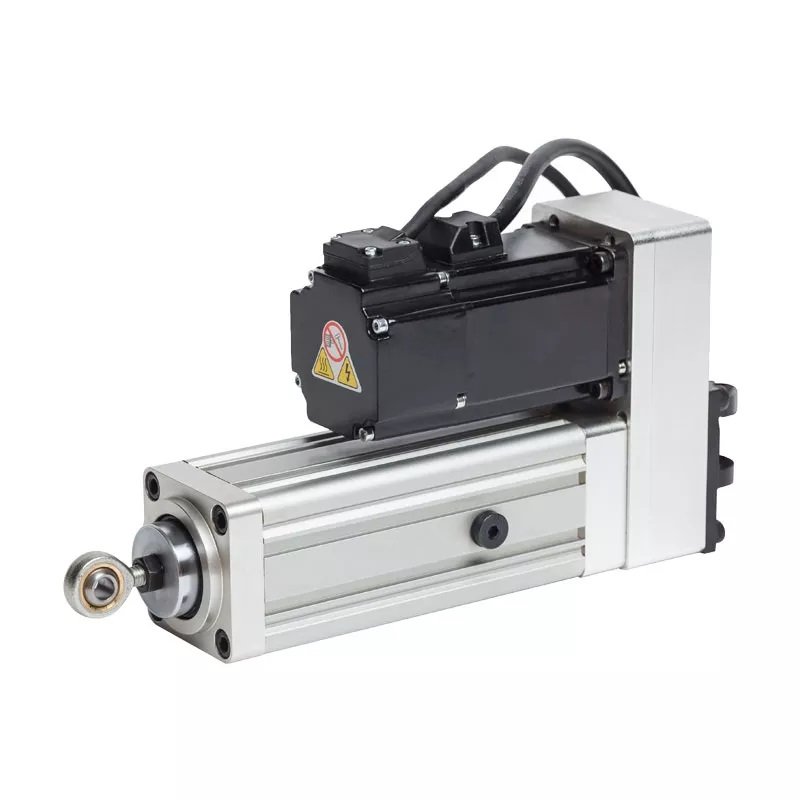
In brief: Servo electric cylinder performance depends on the complete machine cycle. Optimizing only maximum force or speed can worsen heat, wear or positioning behavior.
servo electric cylinder performance: engineering checklist
Begin with the application requirements and record the baseline before changing settings. The appropriate configuration depends on the actual actuator, drive, external guidance and machine cycle. Use the selected components’ manuals for limits.
Size force and motion together
Calculate process load, friction, gravity and acceleration for each stage. Check both continuous and peak ratings of the selected actuator and motor. Include stroke, screw lead and duty cycle rather than extrapolating from a single peak-force number.
Tune the motion profile
S-curve acceleration may reduce shock in a compliant machine, but cycle time and settling must be validated. Record following error, current and vibration before changing the profile. Modify one parameter at a time and retain a documented baseline.
Control friction and temperature
Alignment, external guidance, lubrication and contamination affect efficiency and repeatability. Monitor temperature during representative repeated cycles. Apply the manufacturer’s maintenance interval and lubricant for the model and environment.
Measure the real outcome
Define success as a target cycle time, repeatability and acceptable temperature under the production load. Use independent measurement where accuracy matters. If a change improves one metric but worsens another, evaluate the full process requirement.
Practical verification steps
- Record model, load, stroke, speed, duty, orientation and relevant alarms.
- Compare the actual measurements with the actuator and drive documentation.
- Inspect the mechanical load path and safety controls before adjusting the motion profile.
- Change one condition at a time and retest the complete operating cycle.
Frequently asked question
How should I confirm the selection? Share the load case, motion profile and drawings with engineering. A model-specific calculation is more useful than a general force, speed or accuracy promise.
Read the NEFEIT resource center, failure diagnosis guide and product range, or contact NEFEIT engineering. The THK technical resources offer further linear-guidance background; follow the actual component manuals for requirements.