
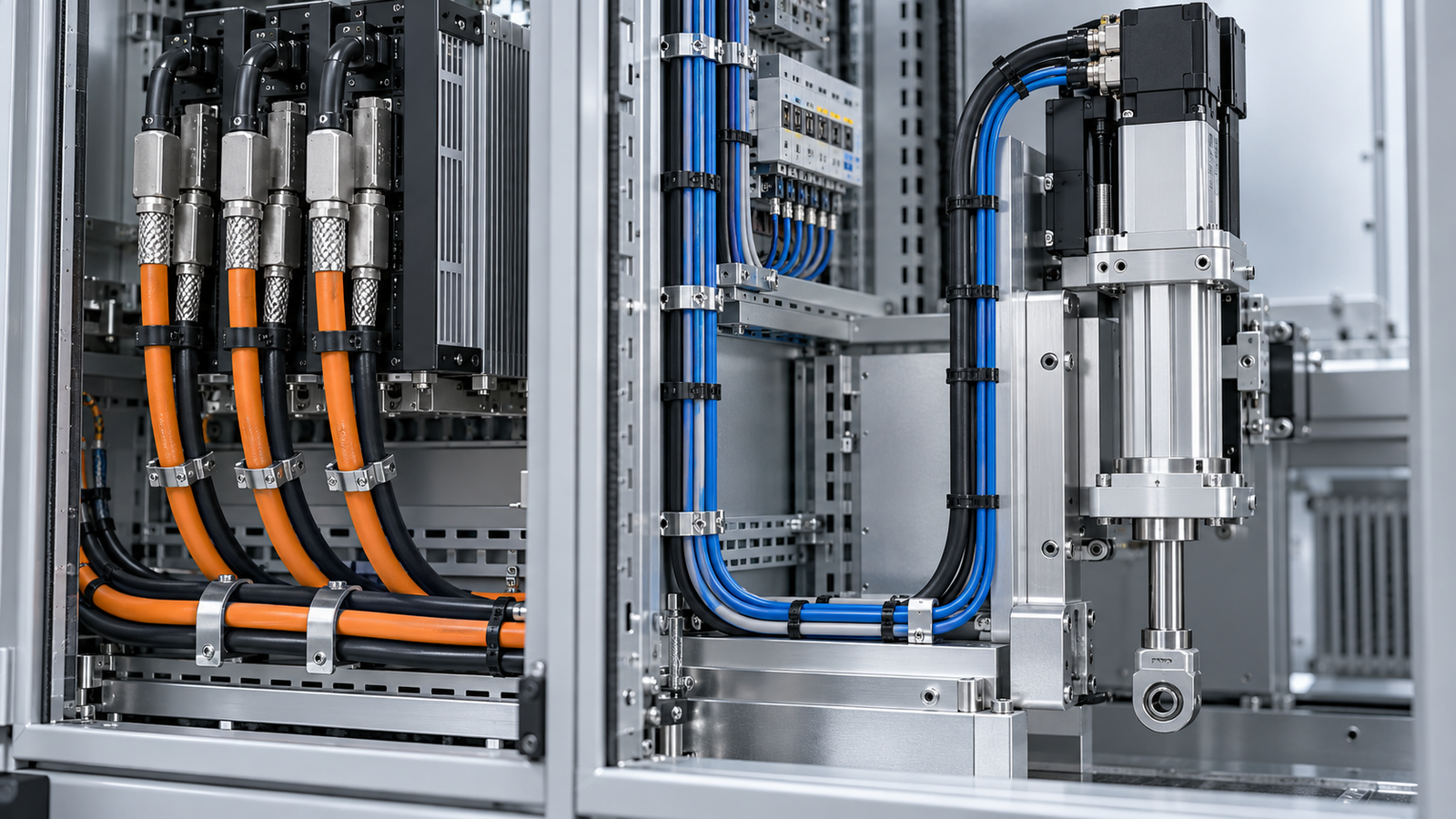
Servo electric cylinder failure causes range from mechanical binding and load mismatch to power, feedback and drive configuration. Record the symptom and the exact alarm code before replacing a component. A useful diagnosis compares commanded motion, actual position, motor current and temperature during the same cycle.
Five servo electric cylinder failure causes to check
1. Load or duty exceeds the selected operating range
Compare peak and continuous thrust, speed, acceleration, stroke and cycles per hour with the specific actuator, motor, screw and drive ratings. A cylinder sized for a short peak force can still overheat in a repeated production cycle. If the process or payload changed, revisit the selection data before changing protection limits.
2. Misalignment, side load or binding
Check mounting faces, rod-end connection and external guides over the full stroke. An offset load raises friction and may cause vibration, higher current, uneven wear or a following-error alarm. Test at reduced speed under the machine’s safe procedure; do not use additional drive torque to overcome a binding guide.
3. Screw, bearing or lubrication condition
Inspect contamination, wear, unusual noise and lubricant condition using the model-specific service instructions. Screw life and critical speed depend on geometry, load and support arrangement; the THK ball screw selection reference describes these engineering checks. Do not apply a generic lubrication interval to every actuator.
4. Power, encoder or cable faults
Verify supply voltage under load, protective earth, motor and encoder connectors, shielding and cable movement. Compare the exact drive alarm with its manufacturer’s manual. Intermittent feedback may look like a mechanical fault, so record signal loss or position jumps alongside motor current rather than relying on an alarm label alone.
5. Control setup and travel protection
Review motor data, electronic gearing, homing, software limits, acceleration and torque limits. Confirm that physical clearance, sensors and safety functions match the machine design. Change one parameter at a time and preserve the original settings so the effect can be measured.
How to investigate servo electric cylinder failure causes
- Stop operation when there is abnormal noise, smoke, damage or repeated overload.
- Record the model, alarm code, operating conditions and the point in the cycle where the fault occurs.
- Follow the machine’s energy-isolation procedure before touching wiring or mechanics. The OSHA hazardous energy guidance explains general control principles.
- Inspect the mechanical path, then power and feedback. Run a controlled, reduced-speed test only when the machine is safe to operate.
- After correcting the cause, repeat the full loaded cycle and compare current, position error and temperature with the baseline.
What information should NEFEIT engineering receive?
Send the actuator model, mounting drawing, force and speed profile, duty cycle, motor and drive model, exact alarm code, and a short trend log or video. This helps distinguish a selection issue from installation or control issues. For a symptom-focused route, see the troubleshooting articles or the load deviation guide. Contact NEFEIT engineering for a model-specific review.
Frequently asked questions
Does a drive alarm mean the cylinder itself has failed?
No. An alarm can be triggered by the load, wiring, feedback, limits or drive settings. Preserve the exact code and verify the cause before replacing the actuator.
Can a larger motor solve repeated faults?
Only if sizing is the confirmed cause. A larger motor will not fix binding, side load, loose feedback wiring or incorrect homing.