
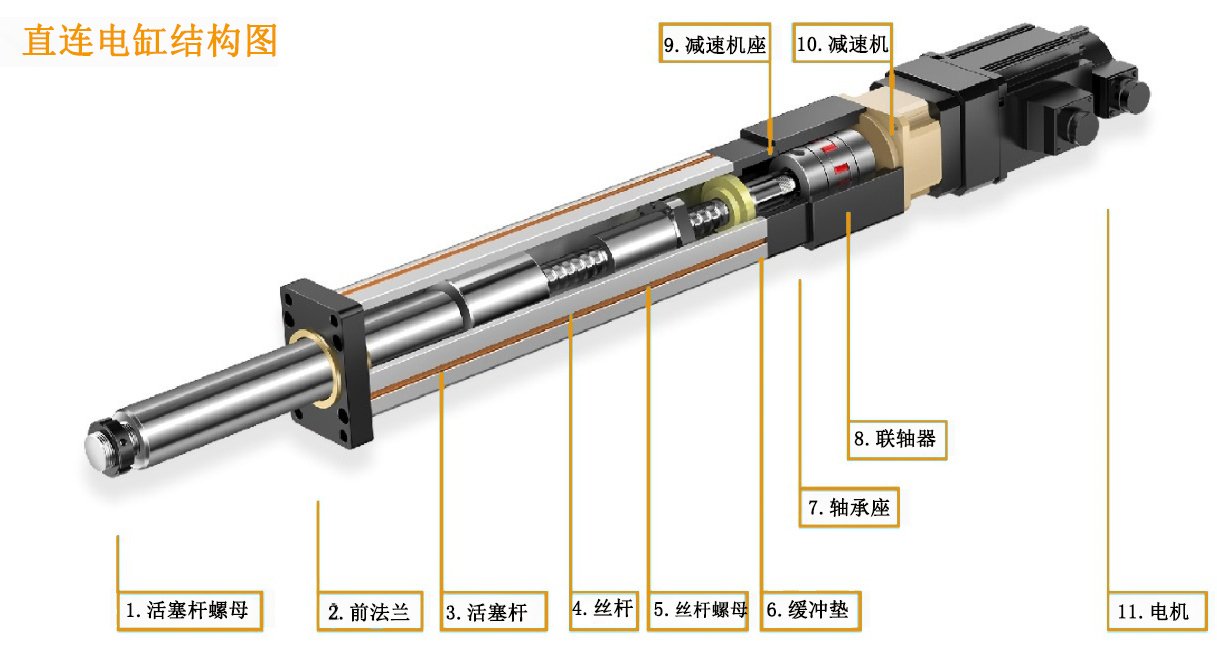
In brief: Servo electric cylinder control modes commonly include position, velocity and torque at the drive. Choose from the process objective, controller interface and feedback requirement.
Servo electric cylinder control modes: position
The controller commands a target position and motion profile. Encoder feedback lets the drive correct position error. Use this mode for repeatable pick, place or indexed motion, while checking backlash, guide stiffness and load disturbances.
Speed control
The drive regulates shaft speed and the screw converts rotation to linear travel. Use it when a process needs a controlled feed or approach rate. Add travel limits and a higher-level stop condition; speed control by itself does not define a safe end position.
Torque and force control
Torque mode regulates motor torque, which can be related to axial force through screw lead and efficiency. That relationship changes with friction and temperature. For processes with a specified contact force, use a calibrated load cell and suitable control architecture when direct force measurement is required.
Transition and safety checks
Many processes use position or speed for approach and then change to a force-limited operation at contact. Validate the handoff, overload behavior, soft limits, mechanical end stops and the response to sensor failure. Record position, current and force traces during commissioning.
Explore related control guides, servo electric cylinder options, or ask NEFEIT engineering about the interface and duty cycle.
Application check
Position mode needs homing and travel limits. Velocity mode needs a defined stopping condition. Torque mode commands motor output but does not directly measure tool force; add a calibrated force sensor where acceptance depends on process force. Check the drive manual for transition behavior and test the loaded axis at reduced speed.