
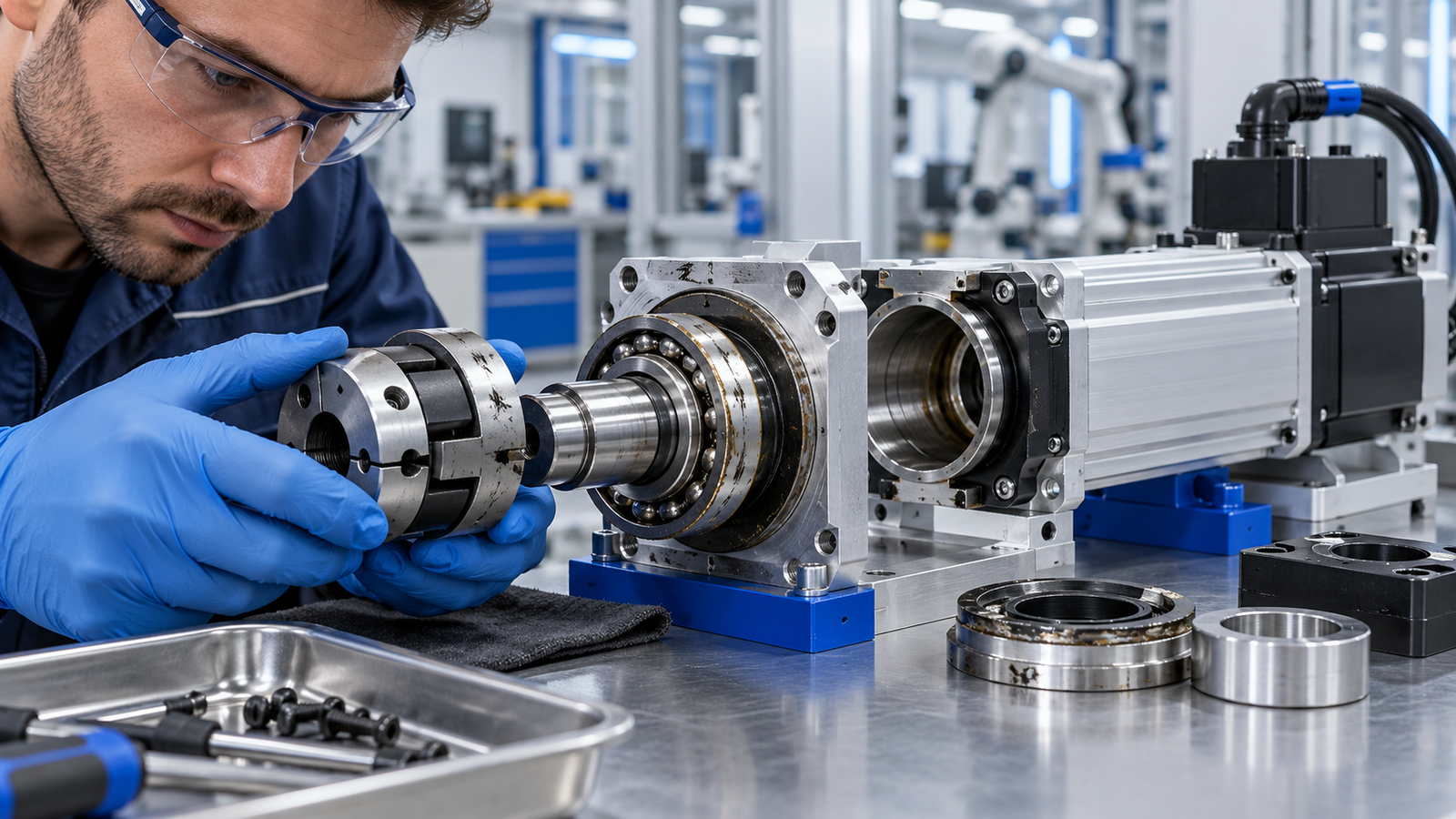
In brief: Servo electric cylinder overtravel troubleshooting should separate a genuine excessive command from a false position reference or sensor issue. Preserve the fault record before clearing it.

servo electric cylinder overtravel troubleshooting: engineering checks
Use the application drawing, motion profile and exact component manuals. Record the operating baseline before changing settings so that a correction can be verified under the same load and cycle.
Read the fault context
Record the alarm code, command position, actual position, speed and location of the tooling. Compare the event with the recipe, recent edits and the last successful cycle.
Verify limits and homing
Check the home sensor, soft-limit values and end-limit wiring. A shifted datum or changed tool can invalidate the safe travel envelope. Do not extend a software limit to hide a physical interference.
Review braking and load
High inertia or aggressive deceleration can carry an axis beyond its intended stop point. Review the actual motion trace and load. Inspect coupling, guide rail and mechanical clearance under approved isolation.
Retest safely
After correcting the cause, run at reduced speed away from personnel, verify both ends of stroke and then test production load. Document the approved limits and alarm response for maintenance.
What to document
- Actuator, motor and drive models, payload, stroke, orientation and duty cycle.
- Alarm code, current, command and actual position at the first symptom.
- Mechanical alignment, external guidance, travel limits and safety response.
- One controlled change and a repeat test under the full production cycle.
Frequently asked question
Can I use one force or accuracy value for every model? No. Ratings depend on screw, motor, drive, mounting and duty. Ask for the datasheet and a review of the actual load case.
For adjacent topics, see the NEFEIT resource center, selection guide and failure diagnosis. Contact NEFEIT engineering with your drawing and trace data. For general guidance on linear motion components, consult THK technical resources alongside the actual component manuals.