
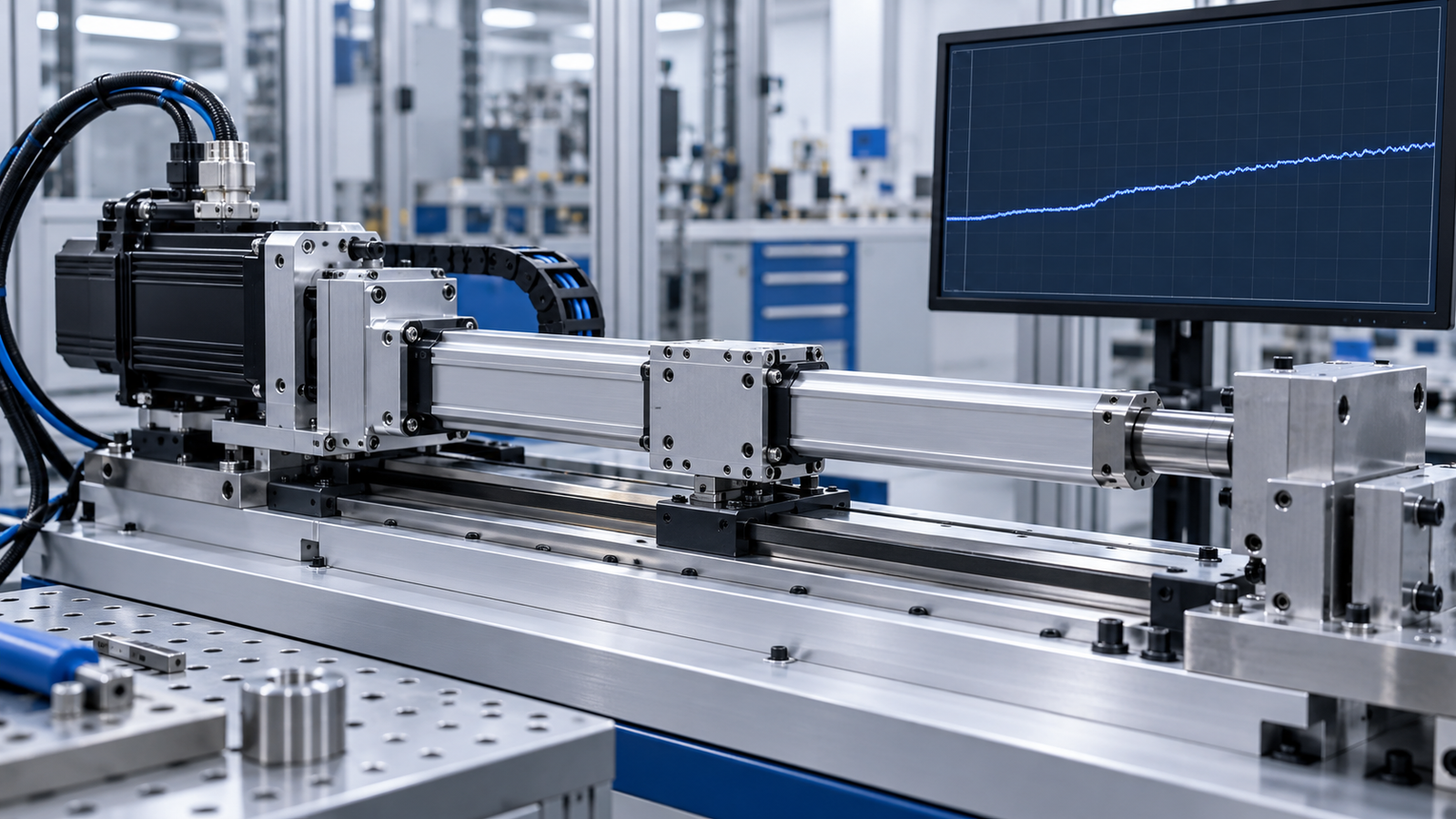
In brief: Servo electric cylinder overtravel, overload and creeping are different symptoms. Identify which condition occurs and capture the relevant trace before changing limits or gain.
servo electric cylinder overtravel overload creeping: engineering checklist
Begin with the application requirements and record the baseline before changing settings. The appropriate configuration depends on the actual actuator, drive, external guidance and machine cycle. Use the selected components’ manuals for limits.
Overtravel and limits
Overtravel means the axis reaches or exceeds an intended motion boundary. Check commanded targets, homing offset, software limits, limit sensors and physical clearance. Do not increase a limit until the machine envelope and safety design have been reviewed.
Overload and current
Overload can arise from excess mass, acceleration, friction, side force or a thermal duty cycle. Compare current and load across the stroke. A spike at one location suggests binding; sustained high current throughout the cycle suggests a broader sizing or process issue.
Low-speed creeping
Creeping or stick-slip at low speed may come from friction, lubrication, backlash, tuning or encoder noise. Reproduce the symptom at controlled speed and load. Inspect mechanics first; then follow the drive supplier’s low-speed tuning procedure.
Recovery and retest
Record alarm codes, commanded and actual position, current and cycle conditions. Isolate energy before mechanical inspection. After correction, test the full stroke at reduced speed and then under normal load, checking both ends and repeated cycles.
Practical verification steps
- Record model, load, stroke, speed, duty, orientation and relevant alarms.
- Compare the actual measurements with the actuator and drive documentation.
- Inspect the mechanical load path and safety controls before adjusting the motion profile.
- Change one condition at a time and retest the complete operating cycle.
Frequently asked question
How should I confirm the selection? Share the load case, motion profile and drawings with engineering. A model-specific calculation is more useful than a general force, speed or accuracy promise.
Read the NEFEIT resource center, failure diagnosis guide and product range, or contact NEFEIT engineering. The THK technical resources offer further linear-guidance background; follow the actual component manuals for requirements.