
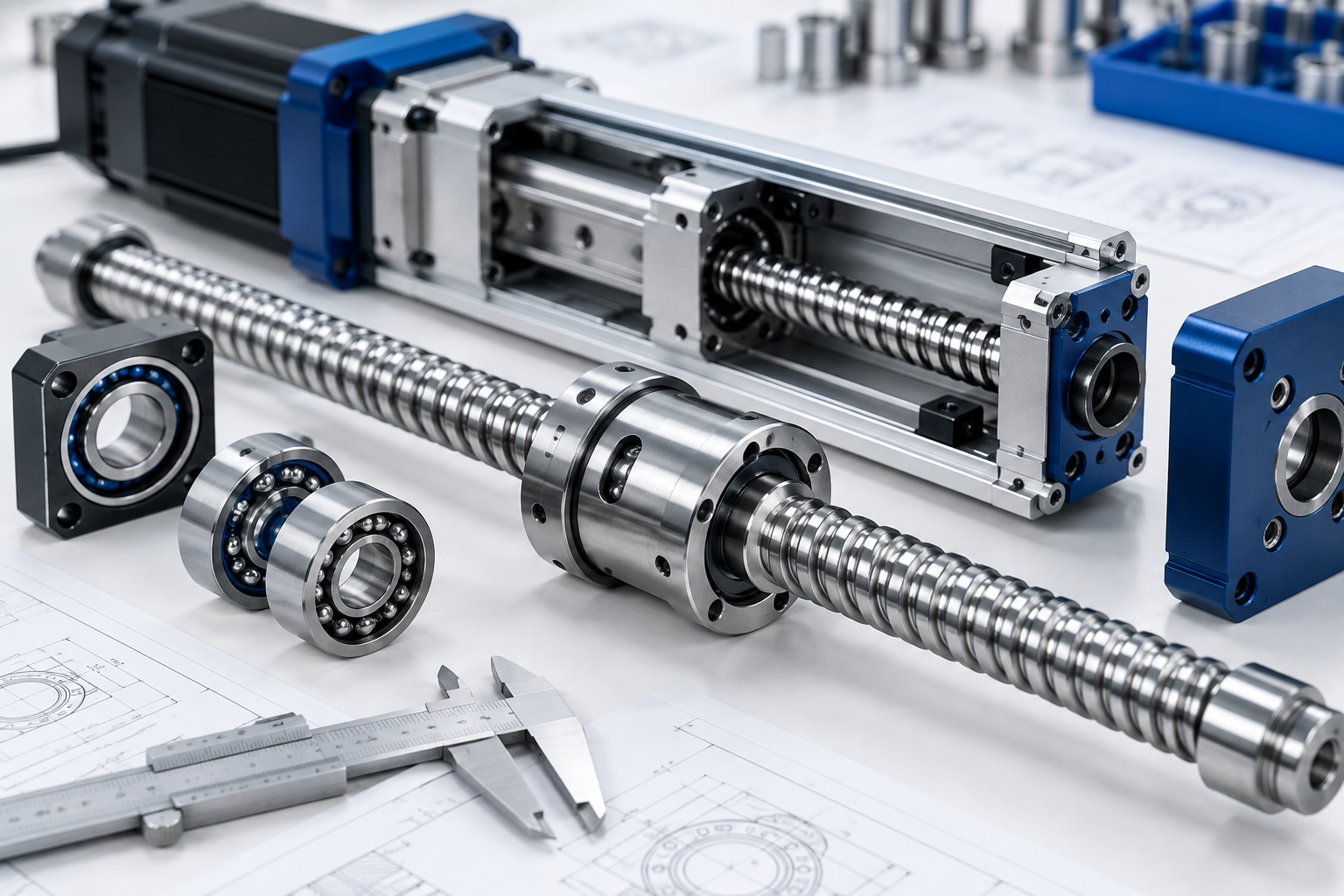
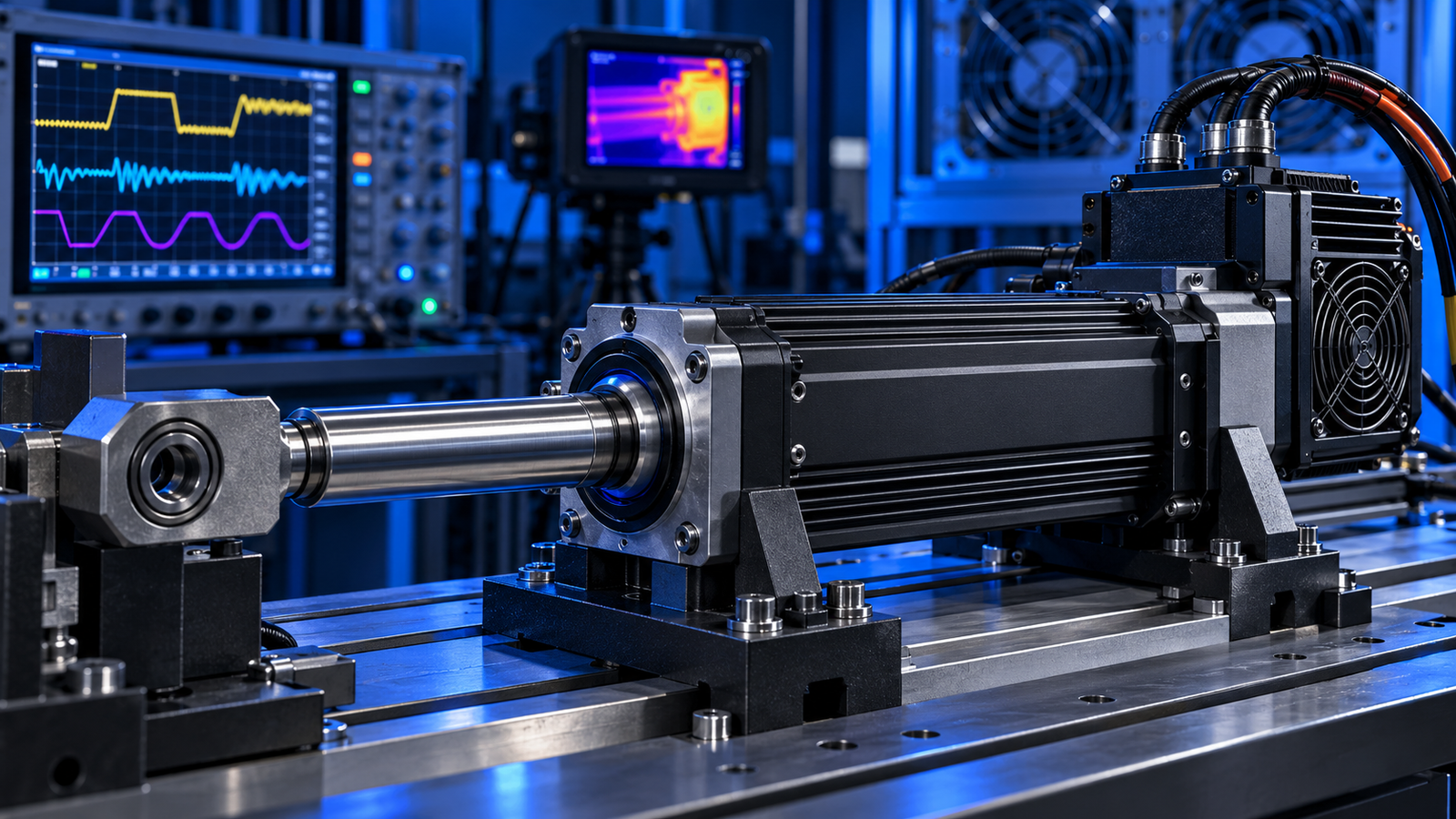
In brief: Electric cylinder ball screw diameter is selected from the actual axial load, stroke, support arrangement and rotational speed. Check buckling, critical speed, stiffness and bearing life with the manufacturer data.
Electric cylinder ball screw diameter: load case
Record peak and continuous thrust, acceleration, orientation, stroke, cycle rate and any external side load. Calculate the axial load in both directions through the complete cycle. The screw, nut, support bearings, motor and actuator frame must all suit that load case.
Check buckling and critical speed
A long screw under compression can buckle. A rotating screw can also approach a critical speed that depends on free length and end support. Evaluate both limits with the manufacturer’s calculation method and the intended safety margin. Changing the support arrangement or screw lead may be more useful than simply increasing diameter.
Check rigidity, life and heat
Screw deflection, backlash, preload, bearing stiffness and thermal growth affect positioning. Estimate screw and bearing life using the equivalent cycle load, not only a maximum catalog rating. Higher preload can improve stiffness but also raise heat and torque demand.
Request the right data
Give the actuator supplier thrust versus position, speed profile, total stroke, mounting orientation, duty cycle, required repeatability and available envelope. Ask for assumptions behind the proposed diameter, support method and life estimate. THK’s ball screw technical resources are a useful starting point for manufacturer-specific calculations.
See the complete selection guide, browse NEFEIT actuators, or request an application review.
Application check
For long strokes, the limiting case may be buckling or rotational critical speed even when static axial force appears acceptable. Confirm end support, screw lead, target speed and the worst-case extension. A larger diameter changes inertia and motor sizing, so review the transmission as a system rather than changing the screw alone.