
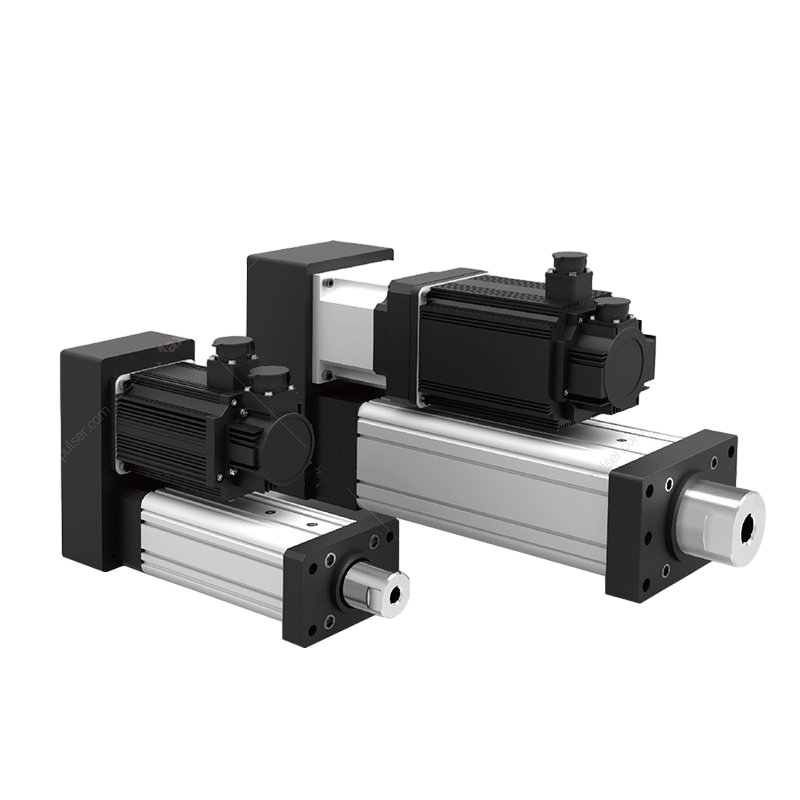
In brief: A servo electric cylinder selection checklist begins with the application duty cycle rather than nominal thrust. Specify force, stroke, speed, mounting, orientation and required sensing.
Servo electric cylinder selection checklist: data
- Load: record the moving mass, external process force and any peak impact or off-axis force.
- Motion: list stroke, target speed, acceleration, dwell times and cycles per hour.
- Accuracy: distinguish absolute positioning accuracy from repeatability and process force tolerance.
- Environment: note temperature, dust, washdown, available space and electrical supply.
Separate continuous and peak demand
A short peak force and a repeated continuous load produce different thermal and life requirements. Calculate the force over the complete cycle and check the motor, drive, screw and bearings together. In vertical applications, include gravity, braking and the consequences of power loss.
Check geometry and guidance
Confirm the usable stroke after end clearances, mounting method and rod-end alignment. Side loads and moments can shorten screw or bearing life; provide external guidance when the machine imposes them. A parallel motor arrangement may help in a shorter installation envelope, while an inline arrangement may simplify the axis layout.
Compare candidates with the same duty cycle
Ask suppliers for the force-speed curve, allowable duty, screw life assumptions, environmental rating, wiring and maintenance requirements. Do not infer performance from a product photograph or a single headline rating.
Our fuller servo electric cylinder selection guide explains the sizing trade-offs. Browse actuator options and share your application data for a model-specific review.
Application check
Include the worst-case moving mass and process force, not only the nominal payload. State both peak and continuous requirements, acceleration, cycles per hour, mounting angle and any side load. Define the controller interface and safety behavior at end of stroke and power loss. Send a drawing and timeline to engineering for a model-specific calculation.