
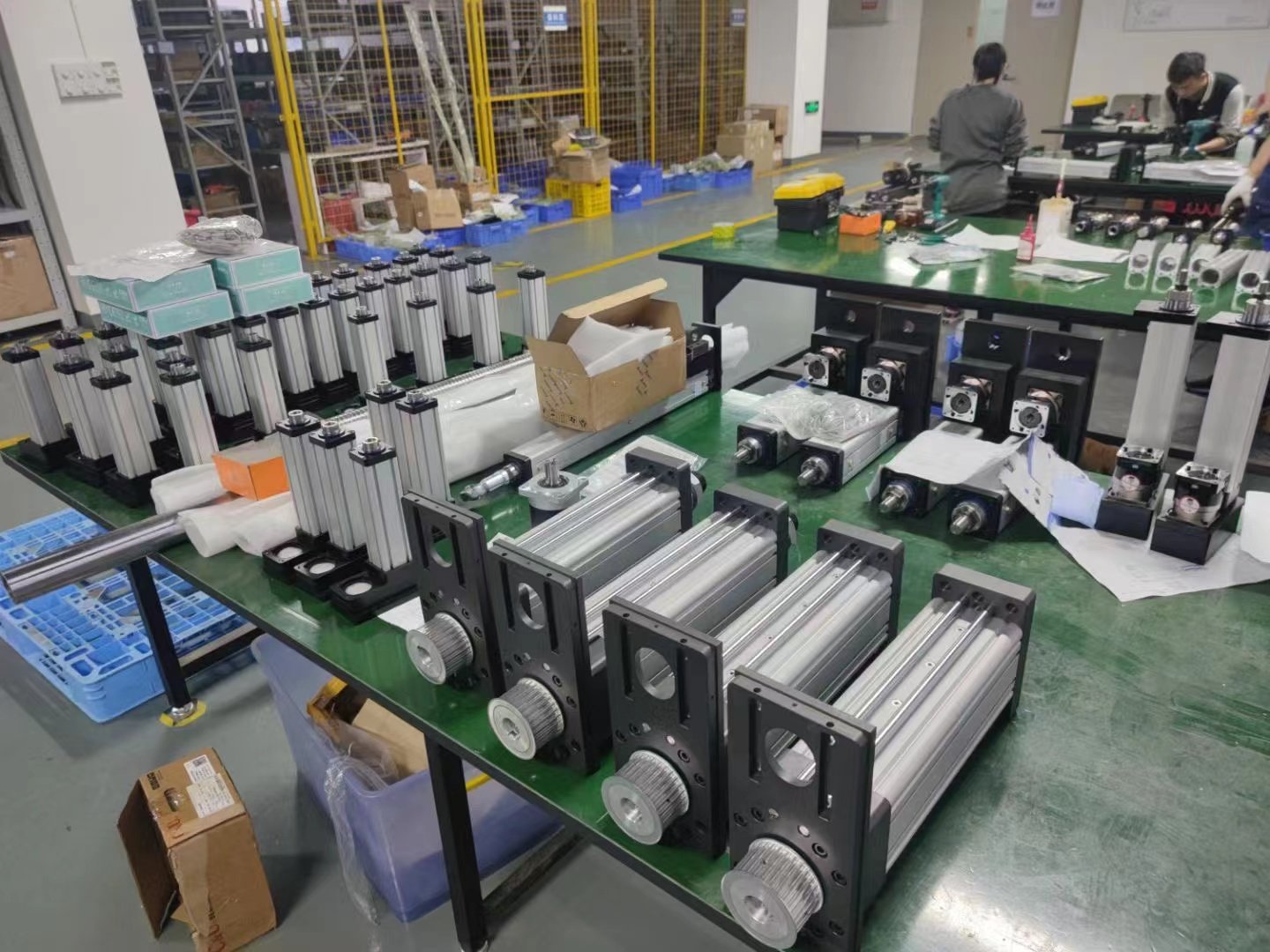
In brief: This servo electric cylinder FAQ answers common questions about load, stroke, speed, mounting geometry and duty cycle. Check the selected model documentation for specific ratings.
Servo electric cylinder FAQ: model selection
Provide peak and continuous thrust, stroke, speed, acceleration, cycles per hour, orientation, accuracy requirement, available space, environment and control interface. A single force number is insufficient for motor, screw and bearing selection.
Can an electric cylinder hold a vertical load?
Some configurations include a motor holding brake, but the brake’s role and rating depend on the design. Assess gravity, power-loss behavior and the machine risk analysis. Do not assume the ball screw is self-locking or that a motor brake is a personnel safety device.
Why can measured force differ from the display?
Motor current estimates shaft torque, while a load cell measures force at its installation point. Screw efficiency, friction, acceleration and fixture geometry can create differences. Compare values at the same point and state in the cycle; see our load deviation guide.
How often should the actuator be lubricated?
Use the supplied model’s maintenance instructions and adjust for duty, contamination and temperature. There is no universal interval for every screw and bearing configuration.
What should I record for a fault?
Capture the model, drive alarm code, recent changes, position and current traces, load, speed and ambient conditions before making adjustments. Avoid repeated resets without finding the cause.
Browse all engineering resources or send your application details for model-specific help.
Application check
For repeatable sizing, record continuous and peak force, payload, stroke, speed, acceleration, cycles per hour and mounting orientation. Define external guidance and the required position or force measurement. If a fault is being diagnosed, note the exact drive code and when it occurs in the cycle. These details make the answer specific.