In brief: Servo electric cylinder load deviation can appear even when the motor runs normally. Confirm how force is measured, then compare the commanded profile with position, current, drive limits and the actual load. Alignment and friction can change the result.
Servo electric cylinder load deviation: first checks
Load deviation is the gap between the expected force and the force measured at a defined point in the cycle. A motor-current estimate, drive torque display and calibrated load cell do not measure exactly the same thing. Record the sensor location, calibration date, direction of travel, speed and temperature before comparing values.

Five checks before changing the actuator
1. Verify the measurement chain
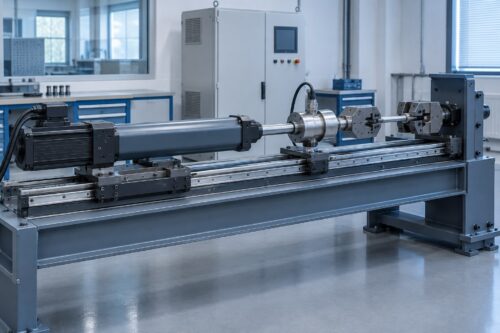
Check load-cell zero, calibration, sampling rate and the fixture. A sensor mounted away from the working point may include fixture friction or omit external reactions. NIST describes why force instruments are calibrated against known applied forces in its force-transducer calibration guidance.
2. Inspect alignment and external guidance
Misaligned guides and side load raise friction and may create different readings in extension and retraction. Isolate the machine according to its approved safety procedure before inspecting couplings, rod ends and guides. Do not force the actuator into a misaligned fixture.
3. Compare static and dynamic portions of the cycle
Acceleration, deceleration and impact can raise peak force above the value seen at steady speed. Compare measurements at the same position and motion state, and record continuous as well as peak demand. See the NEFEIT engineering resources for the broader selection workflow.
4. Check drive limits and motor sizing
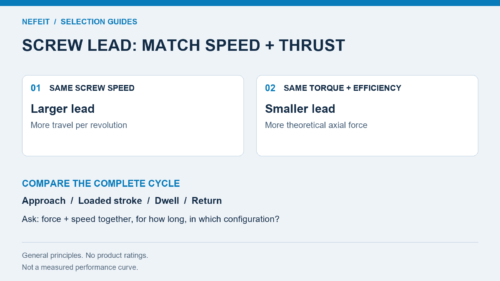
Review current limits, torque limits, speed, screw lead and control mode against the approved drive configuration. Do not increase a limit solely to hide an alarm; verify the motor, screw, bearing and structure ratings first.
5. Confirm repeatability across the real duty cycle
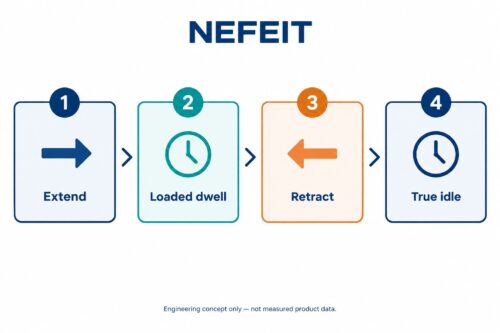
Repeat the measurement at the normal load, stroke and cycle rate. Log position, force, current, alarm codes and temperature together. A deviation that appears only after warm-up can point to thermal or lubrication effects.
When should the machine stop?
Stop and investigate if the actuator binds, makes new mechanical noise, exceeds a rated limit or loses position feedback. Protect personnel from stored and unexpected energy during service. The OSHA energy-control tutorial describes the relevant general safety principles; apply the rules and procedures in your jurisdiction.
What to send NEFEIT for a selection review
Share the model, mounting drawing, force-measurement method, force-versus-position trace, stroke, speed, acceleration, cycle rate, ambient temperature and drive alarm history. These details help the engineering team separate a measurement issue from a mechanical or control mismatch.
Continue with servo electric cylinder options or contact NEFEIT engineering for application-specific support.