
In brief: Servo electric cylinder applications range from assembly and testing to controlled pressing. The useful features depend on the configured motor, screw, feedback and machine controls.
servo electric cylinder applications: engineering checklist
Define the application requirement and record the baseline before adjusting hardware or controls. Each actuator configuration has model-specific limits, so confirm claims against the selected datasheet, drive manual and machine drawing.
What the actuator does
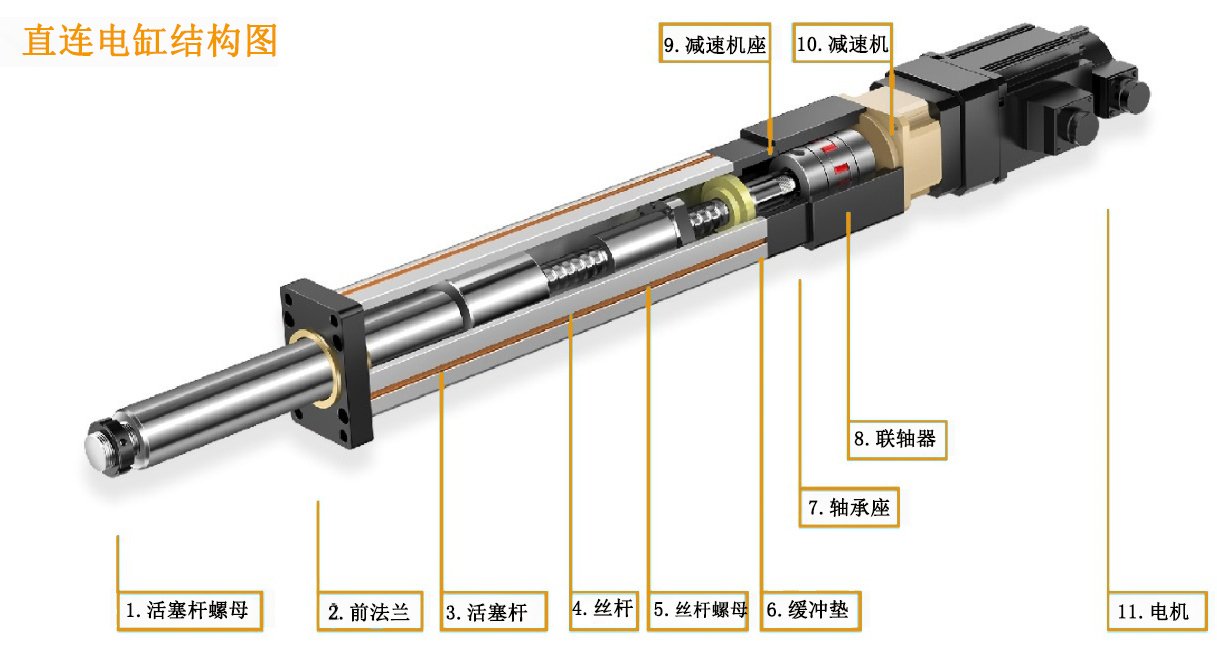
A motor drives a screw or other transmission to create controlled linear motion. Encoder feedback at the motor supports closed-loop control, while an external sensor may be required to measure process force or tool position independently. The complete assembly determines performance.
Assembly and positioning
Use a defined position or force profile for insertion, alignment or transfer tasks. Specify payload, stroke and repeatability at the tool. External guides carry moments and side forces, while the actuator supplies axial motion. Validate the full cycle rather than a single unloaded move.
Testing and pressing
A test rig may need synchronized position, force and alarm data for traceability. Select a calibrated force sensor where acceptance depends on actual force. Confirm how the controller handles overload, emergency stops and power loss.
Selection by application
Record peak and continuous force, speed, stroke, duty, mounting orientation, environment and available space. Compare alternatives with the selected model datasheet. Consider service access, lubrication and cable routing before finalizing the layout.
Practical verification steps
- Record the actuator model, load, stroke, speed, duty, mounting orientation and relevant alarms.
- Compare measurements with the actual component documentation.
- Inspect the mechanical load path, wiring and safety controls before changing settings.
- Change one condition at a time and retest the production cycle.
Frequently asked question
What should be included in a model review? Send the load case, motion profile, environmental conditions and installation drawing. These details support a model-specific recommendation and make assumptions visible.
Explore the NEFEIT resource center, failure diagnosis guide and product range, or contact NEFEIT engineering. The THK technical resources offer linear-motion background; follow the installed components’ manuals for actual requirements.