
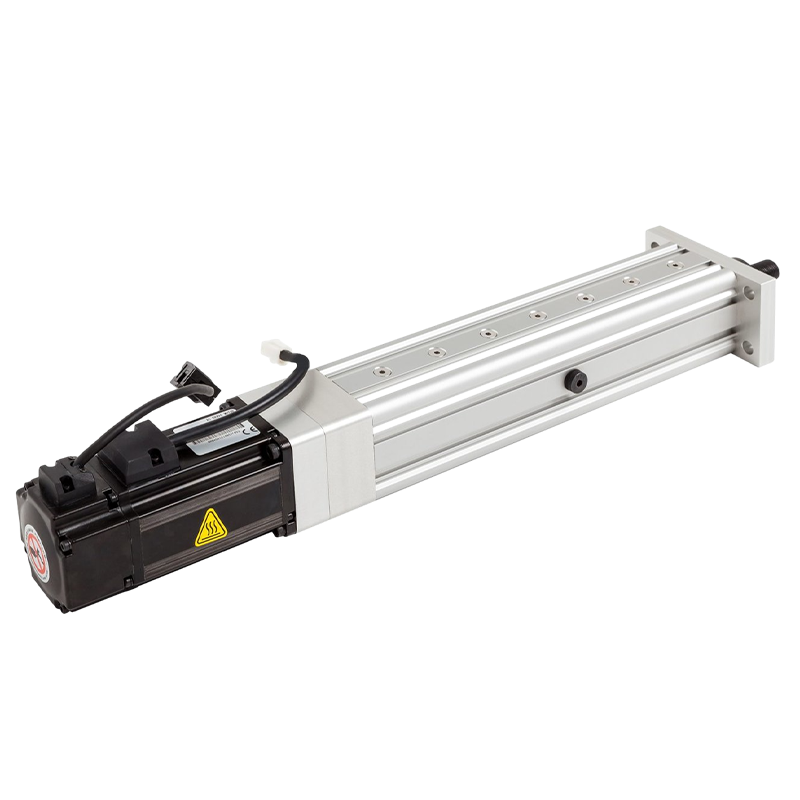
In brief: Electric vs pneumatic vs hydraulic cylinders should be compared under the same load, motion profile and plant conditions. Each approach can suit a different duty.
Electric vs pneumatic vs hydraulic cylinders: comparison
| Criterion | Servo electric | Pneumatic | Hydraulic |
|---|---|---|---|
| Power source | Electric motor and drive | Compressed air | Pressurized fluid |
| Motion control | Programmable position and speed with feedback | Simple end-to-end motion; proportional control requires additional components | High-force motion with suitable valves and feedback |
| System needs | Drive, controls and electrical supply | Compressor, preparation and air distribution | Pump, reservoir, valves and fluid management |
| Common consideration | Screw life, heat and peak force | Air use, compressibility and noise | Leaks, fluid cleanliness and maintenance |
When a servo electric cylinder fits
Choose an electric solution when a process needs several programmable positions, repeatable motion profiles, feedback or integration with digital controls. Check continuous and peak thrust separately. A motor current reading alone is not a substitute for a calibrated process force measurement.
When air or hydraulics may fit
Pneumatics can be practical for straightforward high-cycle transfer tasks where plant air already exists and precise intermediate positioning is unnecessary. Hydraulics can be suitable for very high force and rugged applications, provided the facility can support fluid power equipment and maintenance.
Compare the entire system
Include the compressor or power unit, distribution, controls, energy consumption at the actual duty cycle, maintenance, guarding and expected service life. Avoid comparing actuator purchase prices alone.
See how to size a servo electric cylinder, explore NEFEIT actuator options, or ask for an application review.
Application check
Compare the total installed system: compressor or hydraulic power unit where relevant, distribution, valves, drives, sensors, guarding and service. Use measured duty and local energy costs to evaluate operating cost. Consider control precision, peak force, environment and maintenance access; no single technology wins every scenario.